

Designing for Top-Tier Credit
From Insight to Concept
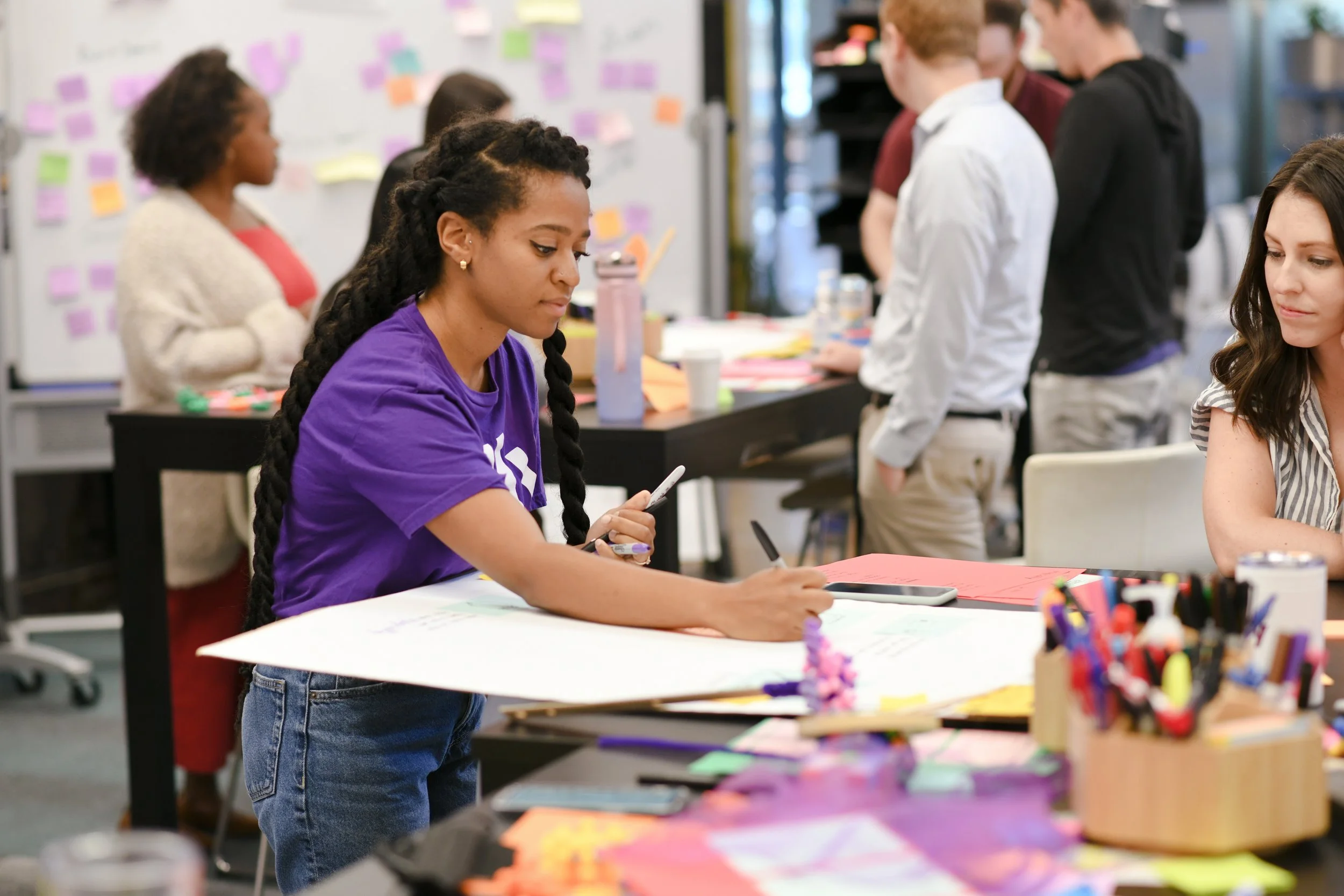
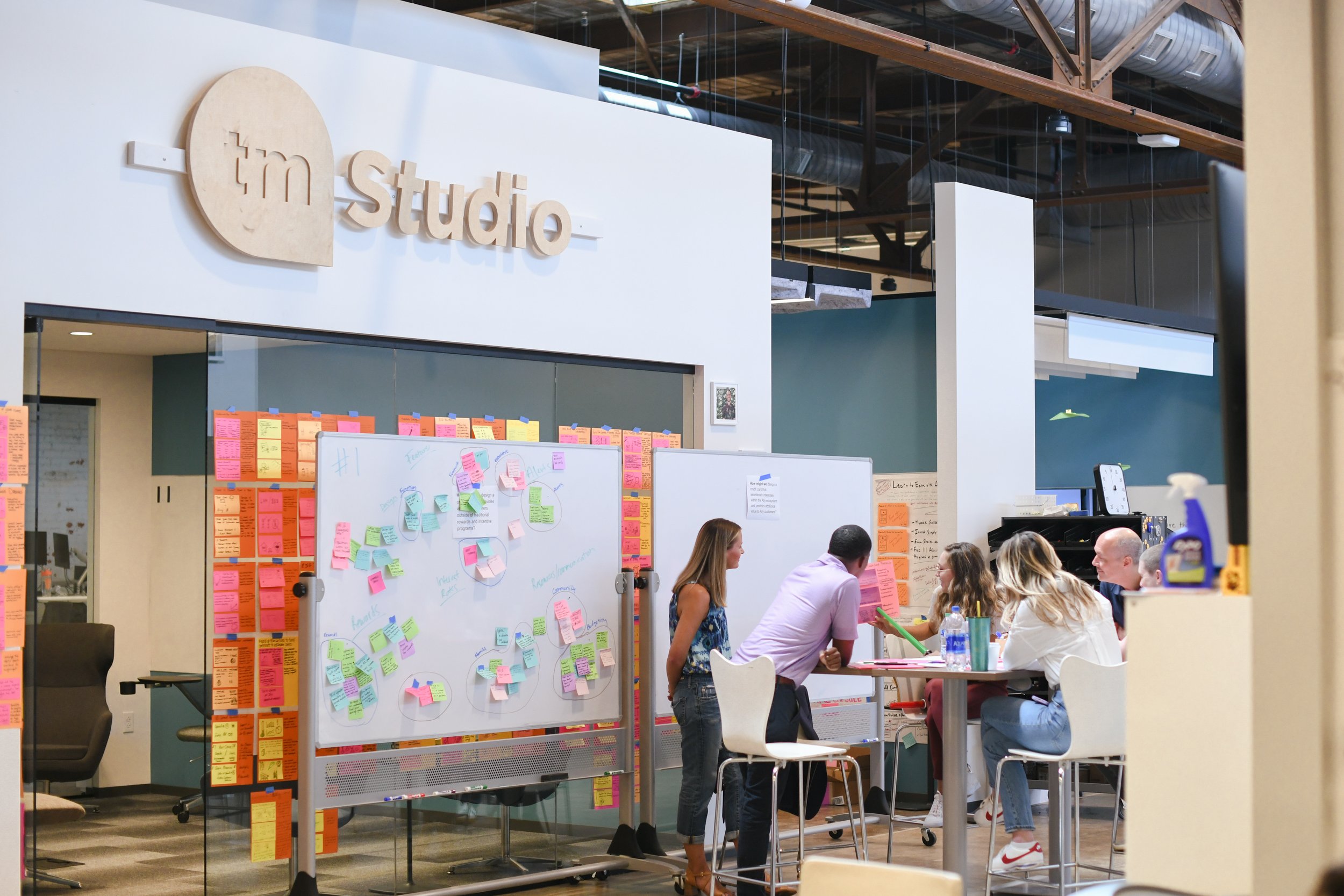
During my rotation at TM Studio, Ally’s internal innovation and ideation lab — I co-led and participated in a multi-day design thinking workshop focused on reimagining Ally’s credit card product.
The goal: design a top-of-wallet credit card for prime and super-prime consumers (680+ credit score) that could compete in an ultra-competitive market by going beyond standard rewards programs.
I operated at the intersection of researcher and facilitator, helping shape the questions we asked, how we listened, and how we turned raw consumer insight into testable concepts.
〰️
Role: UX Designer, Researcher, & Co-Facilitator
Responsibilities: Customer Interviews, competitive analysis, design thinking workshops, concept testing
Note: All visuals and prototypes were recreated by me in 2026
Research Foundation
Before a single idea was generated, we grounded the session in real consumer data. My role included synthesizing survey findings and in-depth interview insights into actionable design direction.
METHODS USED
In-Depth Interviews
Competitive Analysis
Behavioral Segmentation
Concept Testing
Ideation & Concept Development

With our research grounding in place, we moved into structured ideation across three rounds. I co-facilitated the session while actively contributing as a member of Team Three — which required me to hold both the macro view of the room and the micro view of developing strong, defensible ideas.
Round 1 — Designing for Value
HMW Provide value outside of traditional rewards programs.
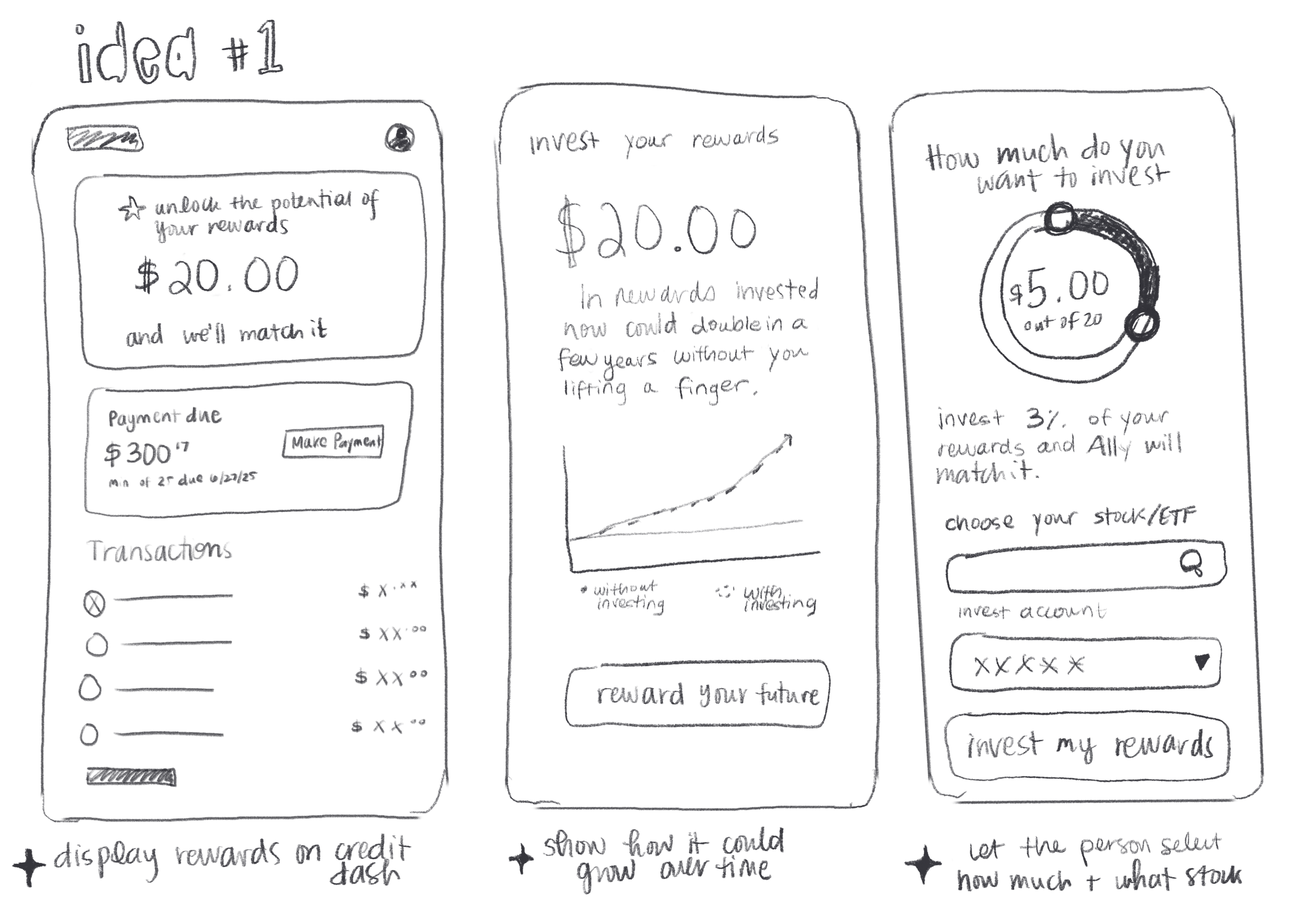
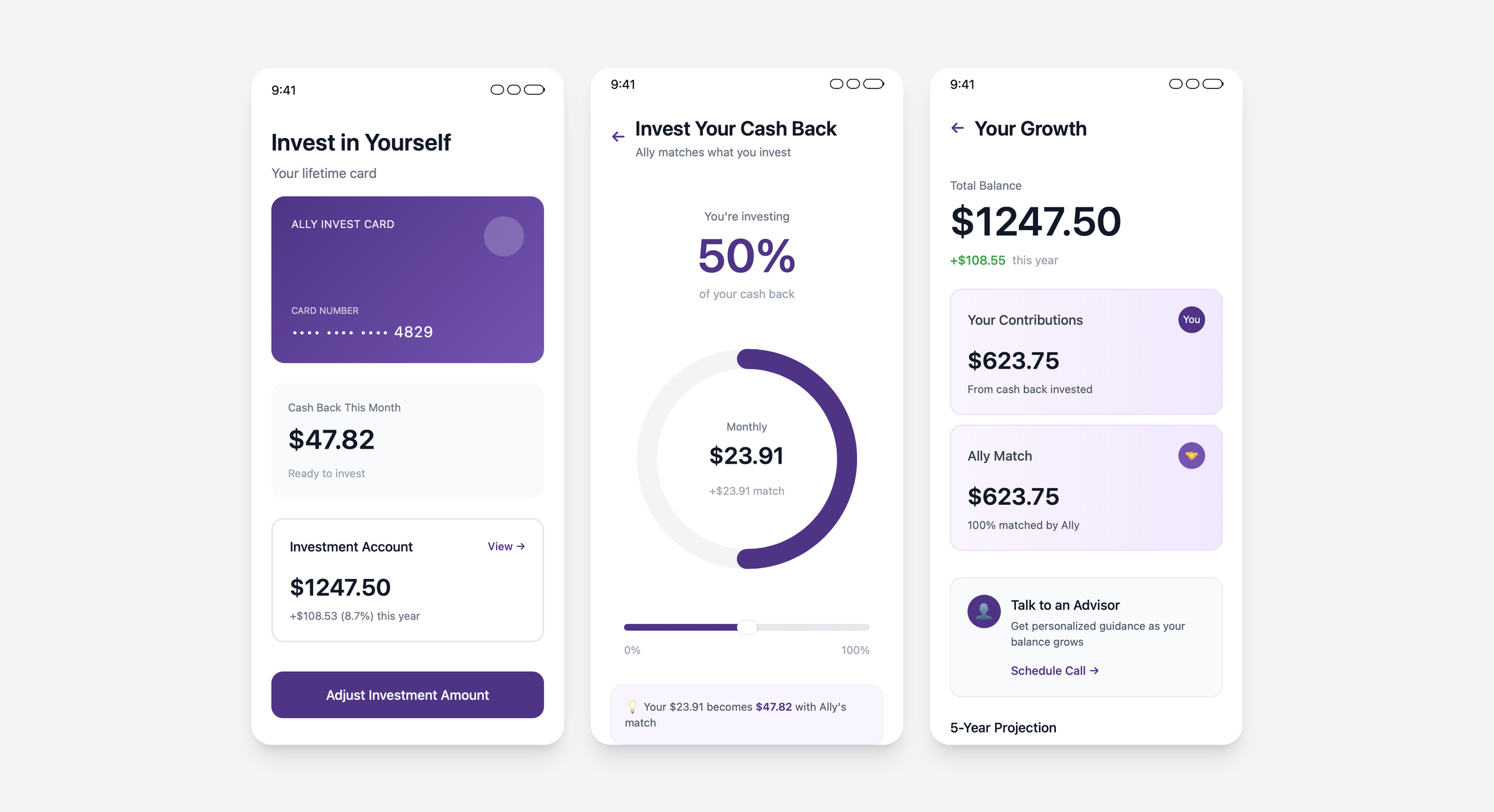
Team Three’s concept centered on a card that lets cardholders direct a portion of their cash back into an Ally investment account — with Ally matching it.
The idea reframed the reward conversation entirely: instead of points that expire or rotate, the card could move you forward financially.
Emerging Themes
What Changed Through Iteration:
Our initial investment-matching concept was too complex — it required consumers to make too many decisions upfront.
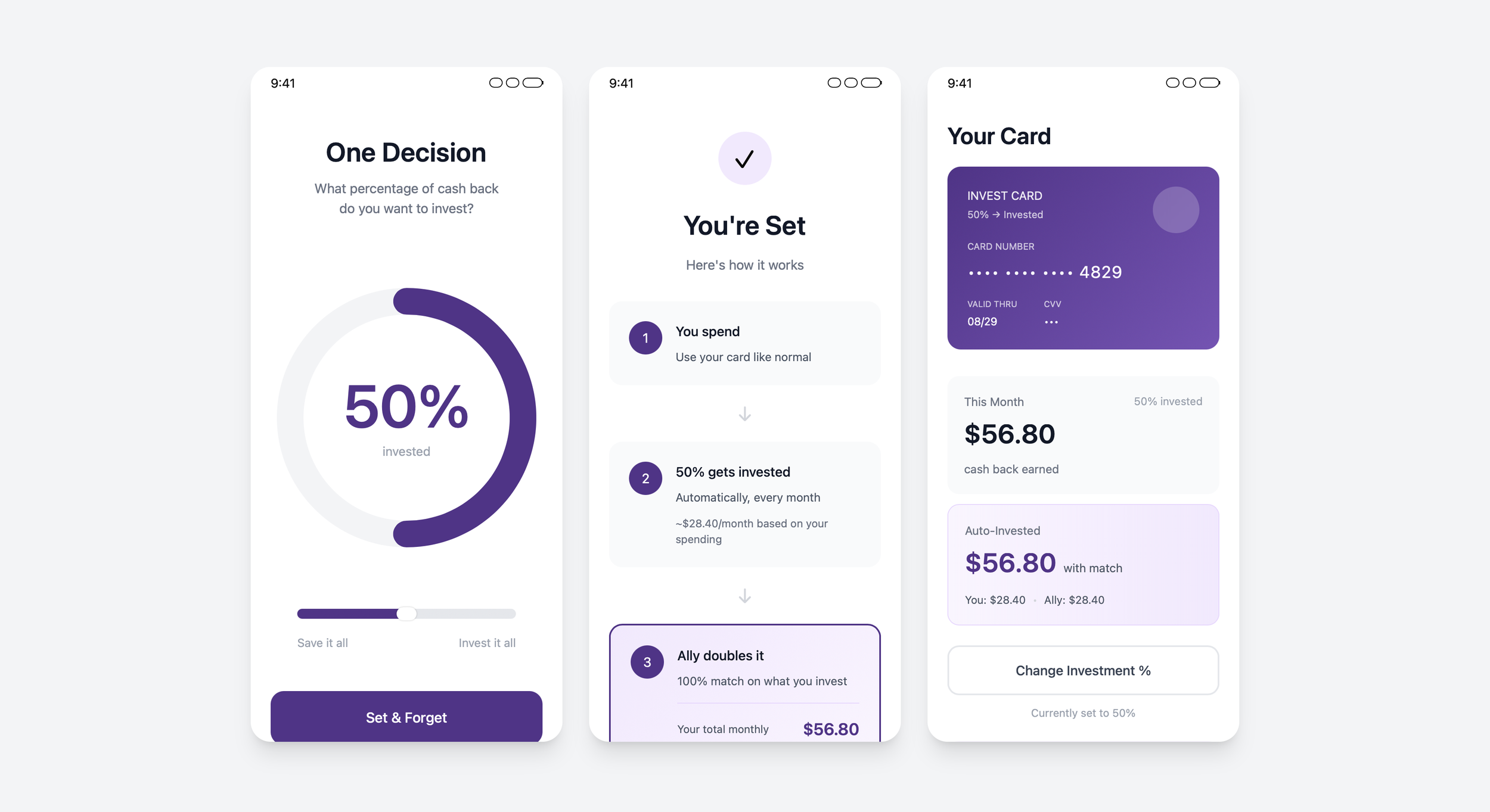
Through critique, we simplified: instead of configuring a financial plan, users just decide what percentage of cash back to invest. One dial. Ally handles the rest. The simpler version tested stronger and felt more true to Ally’s brand voice of making finance feel achievable.
Themes that held across teams
-
🤝 Build deep, long-lasting relationships
Consumers want a card that grows with them, not one that chases them.
-
✨ Offer choice, control, and joy
Agency over how rewards work is more valuable than the reward itself.
-
🍃 Simplify with a "get more, stress less" approach
Every feature that adds complexity is a feature that won’t get used.
Invest In Yourself
〰️
Invest In Yourself 〰️
Outcome & Impact
Executive Presentation
Prototypes and research findings from this session were presented in bi-weekly stakeholder demos and culminated in a final pitch to the CEO and President of Consumer & Commercial Banking at Ally.
Successfully co-facilitated a 24-person, multi-day cross-functional design thinking session
Synthesized consumer interview data into three structured HMW design challenges that drove the entire session
Developed rapid prototypes that earned praise from the Credit Card Director through multiple rounds of critique
Contributed directly to a credit card concept grounded in behavioral consumer research and Ally’s brand strategy
Strengthened my practice in research synthesis, facilitation at scale, executive communication, and fintech product strategy
Reflection
What I valued most about this project was the discipline of listening before designing. The insights that shaped our strongest concepts came from sitting with information long enough to notice what consumers were really saying underneath their stated preferences. Interviewing real people from across the country not only made our insights diverse, but also taught me some tips and tricks on how to use credit cards that I’d never known.
Co-facilitating while actively ideating also sharpened my ability to hold the user’s perspective and the team’s creative process at the same time.